
Padlocks & Cylinder Locks
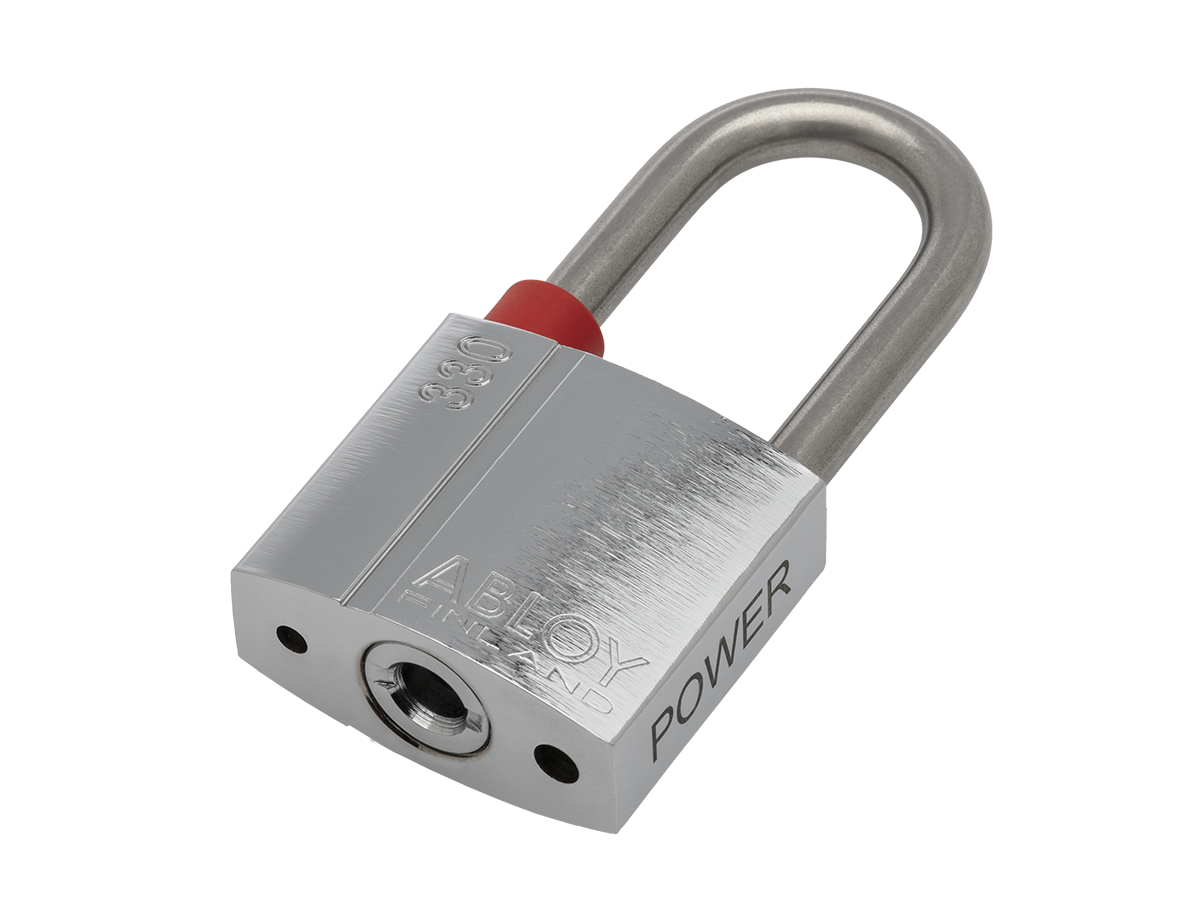
ABLOY specialises in high-security locking solutions designed for extreme conditions. Their products ensure essential protection for both critical and remote infrastructure, maintaining operational continuity. The ABLOY 629, developed by Allied Locks and adopted by ABLOY, is recognised as the workhorse padlock of Critical Infrastructure.
Services We Provide:
Audits & Surveys
Audits - We carefully check how your entry and exit systems work, considering rules and what your business needs. After visiting, we give reports and suggestions.
Surveys - We look broadly at how you manage who can go where. Starting with your goals, we suggest ideas and solutions based on what we find out from you. We provide consultation onsite, if required, along with product and system recommendations and proposals including timelines, costing, delivery and installation.
Consultation
We can visit your location to help and suggest the right products and systems for you. We’ll also give you plans, costs, when things will happen, and how we’ll set everything up.
Ask Us Anything! We’re ready to help you right away. Let’s start planning!
Support
Allied Locks is here to help you with advice and technical support whenever you need it.
ABLOY Padlocks & Cylinder Locks – Frequently Asked Questions
Learn about ABLOY padlocks, cylinder profiles, restricted key systems, and the Allied Locks Enhanced range for critical infrastructure.
ABLOY locks use a rotating disc cylinder mechanism rather than conventional pins and springs. This design is renowned for its durability, reliability and resistance to picking, dirt, moisture and harsh outdoor conditions.
ABLOY manufactures padlocks, door cylinders, cabinet locks and other locking products that can operate within the same restricted master key system. This allows organisations to use the correct lock for each application while maintaining consistent key control across buildings, gates and infrastructure assets.
Critical infrastructure operators need locking systems that remain reliable outdoors while providing strict control over keys and access permissions. ABLOY is widely specified because it combines:
- Proven long-term reliability
- Restricted key control
- Flexible master key systems
- Strong outdoor performance
- A wide range of padlocks and cylinder types
- Compatibility across different locking applications
ABLOY systems are used throughout New Zealand to secure substations, switchrooms, transformers, kiosks, cabinets, gates, industrial facilities and other critical assets.
ABLOY locking systems can be used across almost every commercial, industrial and critical infrastructure application, including:
- Substations and switching stations
- Switchrooms
- Ground-mounted transformers
- Distribution kiosks and RMUs
- Electrical and communications cabinets
- Perimeter and forestry gates
- Water and wastewater facilities
- Renewable energy sites
- Industrial facilities
- Commercial buildings
- Lockout/Tagout systems
Different padlocks and cylinder profiles can often operate within the same ABLOY restricted master key system.
The main ABLOY restricted key systems used in New Zealand include:
- PROTEC
- PROTEC2
- PROTEC3
Each system provides controlled key duplication and supports anything from a simple keyed-alike arrangement to a large, multi-level master key system.
An ABLOY master key system allows different users to have different levels of access within the same locking system.
For example, a contractor may only be authorised to open selected gates or buildings, while a technician or supervisor can access a wider group of locks. A higher-level master key may provide access across an entire site or network.
This reduces the number of keys staff need to carry while maintaining clear and controlled access permissions.
Yes.
One of the main advantages of an ABLOY master key system is that different lock types can operate using the same authorised key.
This allows the correct lock to be used for each asset without creating a separate key system for every application.
In most cases, yes.
Additional padlocks and cylinders can usually be keyed into an existing ABLOY system as buildings, facilities or asset networks expand.
Yes.
Keyed alike means that multiple padlocks or cylinders operate with the same key. This can be useful where one authorised key needs to open several doors, gates or pieces of equipment.
Yes, in most cases.
ABLOY cylinders and compatible padlocks can generally be rekeyed when access requirements change. Common reasons include lost or stolen keys, staff changes, contractor access changes or restructuring an existing master key system.
The correct cylinder depends on the lock hardware and cylinder profile, not simply the type of building. ABLOY manufactures cylinders for Australian oval mortice locks, Europrofile locks, rim locks, cabinet locks, cam locks and other applications.
When replacing an existing cylinder, the easiest approach is usually to match the existing profile and dimensions. If you are unsure, send Allied Locks a clear photo of the lock and cylinder so we can help identify the correct replacement.
Three of the most commonly specified ABLOY cylinders for commercial, industrial and critical infrastructure applications are:
- CY414 – A rim cylinder widely used on substation doors, switchrooms, transformers, kiosks and utility infrastructure.
- CY504 – An Australian oval cylinder used in compatible Australian-style mortice locks.
- CY321 – A Europrofile cylinder commonly fitted to industrial enclosures, commercial buildings, and modern industrial facilities.
Although their physical profiles differ, all three can be incorporated into the same compatible ABLOY restricted master key system.
Yes.
ABLOY cylinders are widely used outdoors on substations, transformers, wastewater facilities, utility compounds, gates and industrial facilities throughout New Zealand.
For coastal, geothermal or highly corrosive environments, Allied Locks can recommend cylinder assemblies and hardware designed to provide improved resistance to corrosion and environmental exposure.
ABLOY cylinders are designed for a long service life and are commonly found in installations that have operated reliably for many years.
The Allied Locks Enhanced CY414 begins with a genuine ABLOY CY414 cylinder and adds components specifically developed for demanding outdoor environments. The enhanced assembly includes:
- A 316 stainless steel backing plate
- A solid brass escutcheon ring
- Genuine ABLOY cylinder components
- Compatibility with ABLOY restricted key systems
These improvements provide greater corrosion resistance around the mounting and escutcheon components while retaining the proven operation of the genuine ABLOY cylinder.
Through years of supplying outdoor cylinders to electricity networks and industrial customers, Allied Locks identified that the ABLOY cylinder itself often remained in excellent condition while surrounding mounting components could deteriorate through corrosion.
Rather than accepting this as unavoidable, we developed a more durable assembly using corrosion-resistant materials.
The result is the Allied Locks Enhanced CY414, designed specifically for substations, switchrooms, transformers, kiosks, wastewater facilities and other exposed infrastructure applications.
No.
The Enhanced CY414 is an Allied Locks exclusive. It is assembled in-house using a genuine ABLOY CY414 cylinder together with Allied Locks’ own engineered backing plate and escutcheon components.
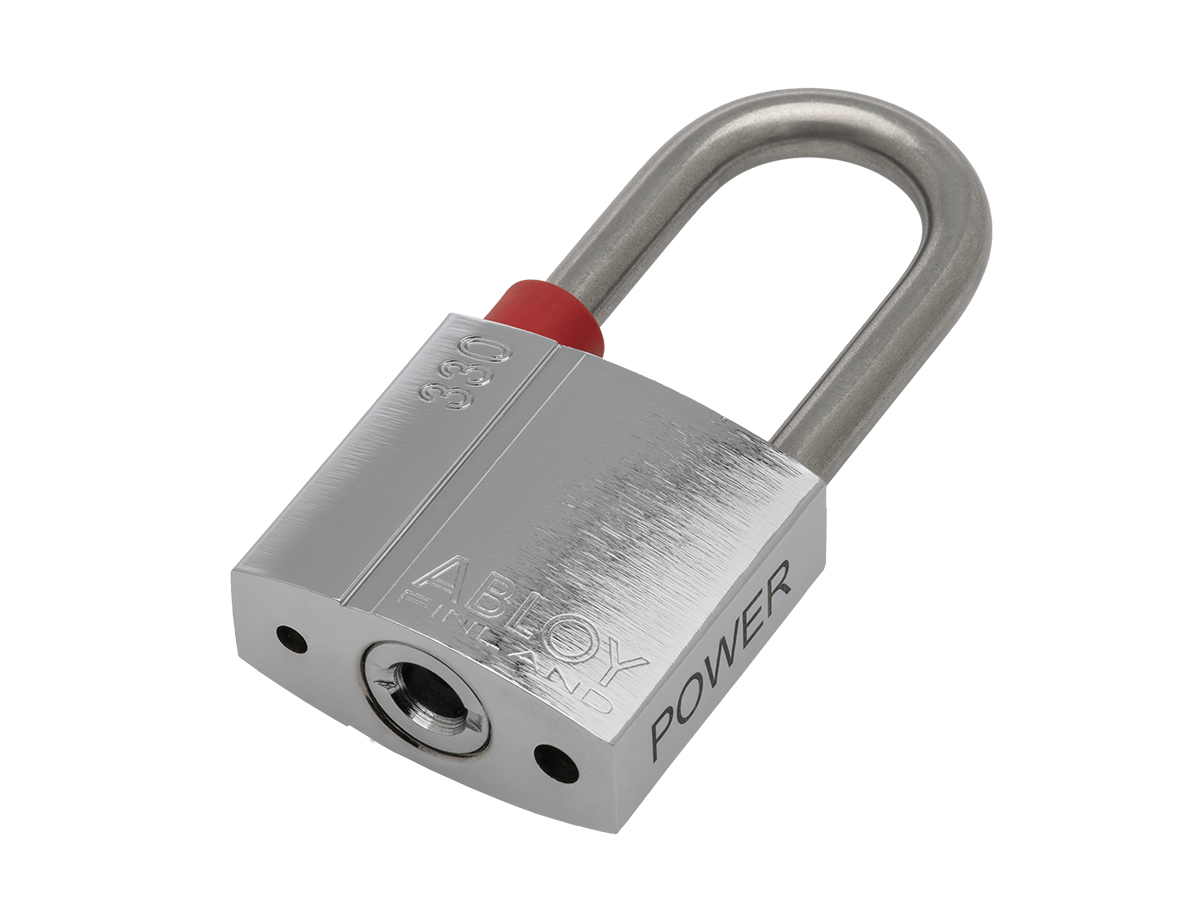
The Allied Locks Enhanced ABLOY PL629 is the workhorse padlock of New Zealand’s electricity industry.
It is based on the proven ABLOY PL330 platform and incorporates enhancements developed by Allied Locks to improve corrosion resistance, durability and long-term outdoor reliability.
The PL629 is used by Transpower and every New Zealand electricity network operating ABLOY locking systems. It is also used across water, wastewater, telecommunications, transport, renewable energy and industrial infrastructure.
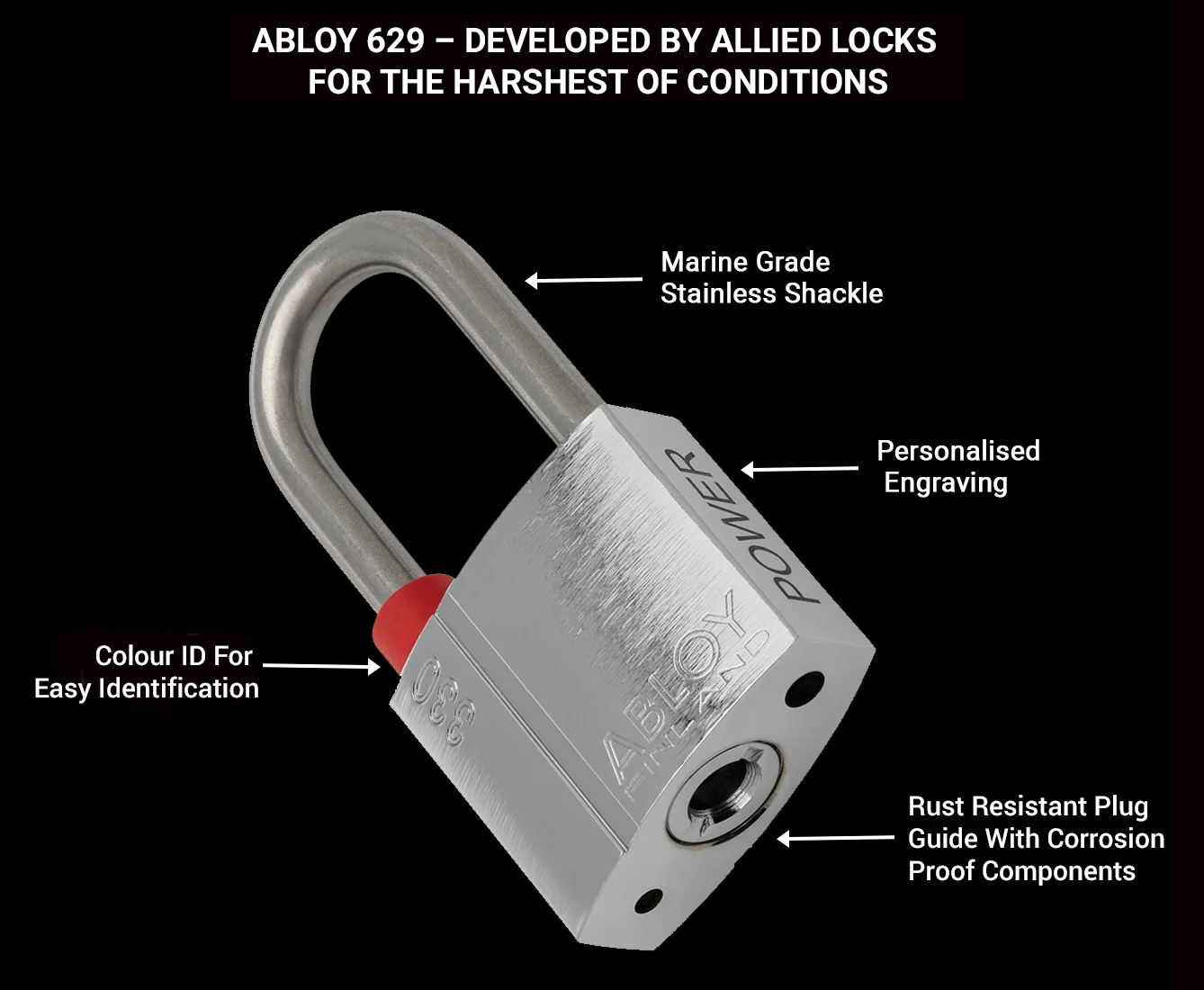
The Enhanced ABLOY PL629 retains the proven body and locking platform of the ABLOY PL330 but includes several important material upgrades:
- A 2205 duplex stainless steel shackle
- A brass profile plate
- A brass cylinder plug
- Genuine ABLOY internal components
These enhancements were developed to improve corrosion resistance and long-term performance in exposed, coastal, geothermal and industrial environments.
Not all stainless steels provide the same strength or corrosion resistance.
2205 duplex stainless steel offers excellent mechanical strength and strong resistance to corrosion, particularly in environments exposed to salt, moisture, chlorides and aggressive atmospheric conditions.
The Enhanced ABLOY PL629 is commonly used to secure:
- Substations and switching stations
- Transformers and kiosks
- Electrical and communications cabinets
- Perimeter and compound gates
- Water and wastewater facilities
- Renewable energy sites
- Telecommunications infrastructure
- Industrial facilities
- Transport infrastructure
- Remote utility assets
It is designed for applications where padlocks are expected to remain outdoors and continue operating reliably for many years.
Yes.
The Enhanced ABLOY PL629 was developed specifically to improve long-term performance in harsh outdoor conditions.
Its 2205 duplex stainless steel shackle, brass profile plate and brass cylinder plug provide improved resistance to corrosion in salt-laden coastal air, geothermal environments, wastewater facilities, chemical processing sites and other aggressive locations.
Yes.
The PL629 is designed for reliable outdoor operation in demanding New Zealand environments, including alpine substations, mountain sites, wind farms and remote utility assets exposed to freezing temperatures, frost, snow and ice.
The ABLOY rotating disc cylinder mechanism is known for dependable operation in adverse weather.
Yes.
PL629 padlocks can be supplied with durable coloured identification sleeves fitted to the shackles. Matching coloured plastic key-head covers and engraved key tags can also be supplied.
Colour coding is commonly used by electricity networks to identify access levels, competencies, departments, work groups or operational functions.
Yes. Padlock bodies can be permanently laser engraved with information such as:
- Company or network name
- Lock number
- Asset number
- Location
- Department
- Access level
- Customer-specific identification
Keys can also be engraved with key numbers, issue numbers or other identifying information.
Permanent laser engraving improves asset identification, key management, auditing and long-term control of the locking system.
Yes.
The Enhanced ABLOY PL629 and smaller ABLOY PL321 are widely used within New Zealand’s electricity industry for Lockout/Tagout, Access Permit, IASM and RASM applications.
The PL629 has a robust 8 mm shackle, while the PL321 has a smaller 5 mm shackle suited to switchgear, operating handles and equipment with restricted openings.
For personal isolation, Allied Locks recommends a one-lock, one-key approach, with each padlock uniquely keyed, numbered and assigned to an individual.
Yes. Allied Locks has extensive experience helping electricity networks and other critical infrastructure operators develop practical, consistent lock and key standards. We can assist with:
- Master key hierarchy design
- Restricted key management
- Competency-based access levels
- Colour identification standards
- Padlock and key engraving
- Sequential numbering
- Asset identification
- Lockout/Tagout systems
- Access Permit locking systems
- Long-term system expansion and support
The result is a locking system that is easier to identify, control, audit and maintain across its working life.
Yes.
Allied Locks maintains extensive stocks of ABLOY padlocks, cylinders, keys and components to support customers throughout New Zealand.
Most standard orders can be assembled, keyed, engraved and dispatched promptly. We also maintain the in-house capability to support existing master key systems, replacement requirements and urgent infrastructure projects.
Absolutely. Allied Locks regularly supplies projects involving hundreds or thousands of padlocks, cylinders and keys.
We can provide complete project support, including:
- Restricted key systems
- Master key hierarchy design
- In-house assembly and keying
- Laser engraving
- Colour identification
- Sequential numbering
- Key schedules and documentation
- Staged project rollouts
- Network-wide replacement programmes
Whether the requirement is a small extension or a complete infrastructure locking system, we have the stock, capability and experience to deliver.
For decades, Allied Locks has supplied genuine ABLOY locking systems to New Zealand’s electricity networks and other critical infrastructure operators. We supply Transpower and every New Zealand electricity network using ABLOY locking systems, with solutions developed from extensive real-world experience.
From a single replacement cylinder to thousands of padlocks across a national asset network, Allied Locks can design, assemble, engrave, supply and support a complete ABLOY locking solution built for long-term service.